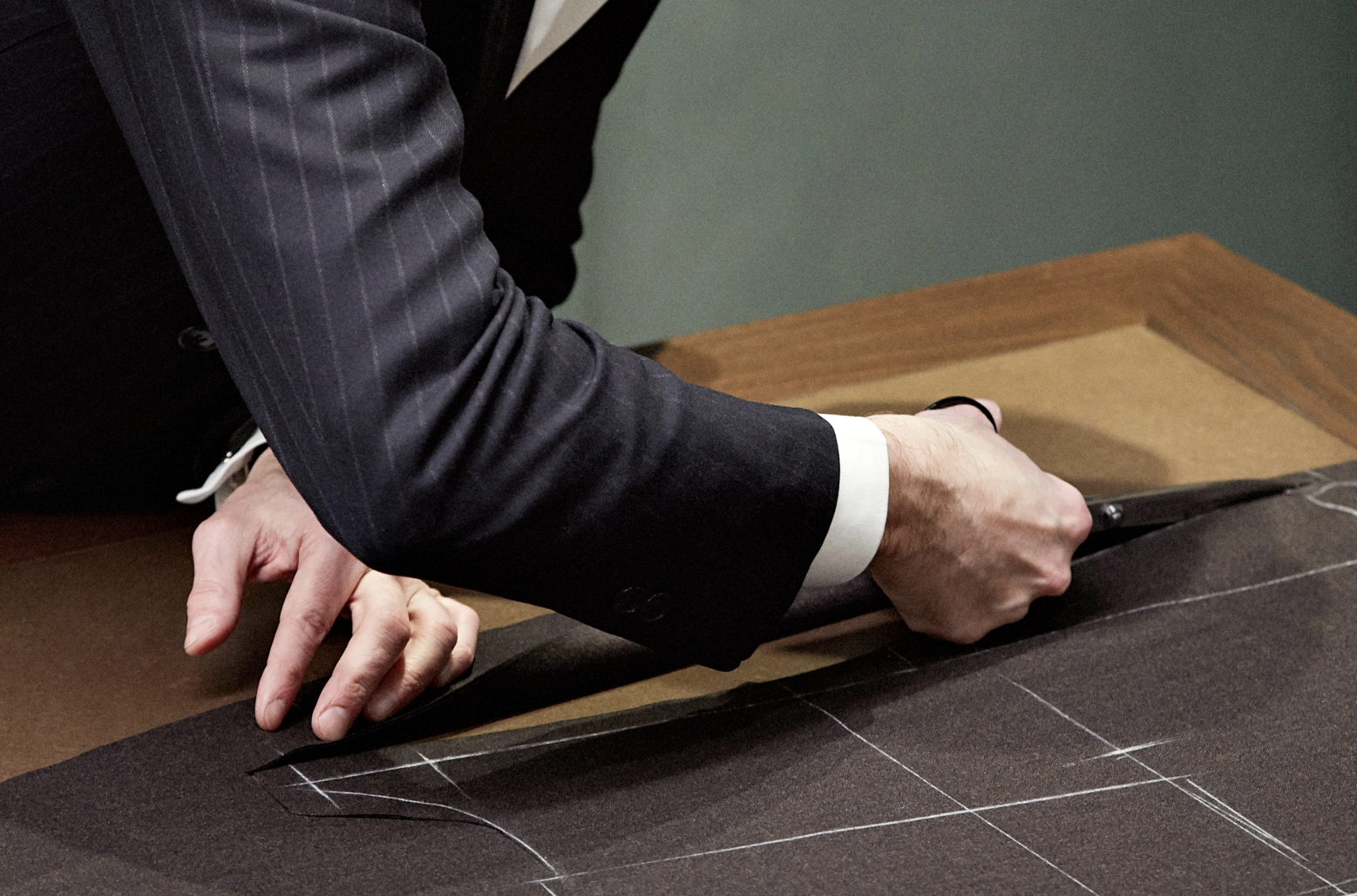
Why Proportion Matters in Tailoring
One of the most powerful things a well-tailored garment can do is optimise the visual proportions of the wearer. The relationship between jacket length, lapel width, button stance, and trouser break creates a visual system that can elongate, broaden, slim, or balance a figure with remarkable effectiveness.
This is one of the key advantages of bespoke and made-to-measure tailoring over ready-to-wear: the ability to adjust these proportional elements specifically for the individual, rather than accepting the standard proportions built into an off-the-rack garment.
Tailoring for Taller Frames
Taller men have the advantage of being able to carry a wider range of suit proportions, but there are specific choices that will flatter a tall frame most effectively.
A slightly longer jacket length — proportional to the torso — prevents the jacket from looking too short relative to the legs. Wider lapels balance a broader chest and prevent the jacket from looking narrow. A lower button stance creates a longer visual line through the torso.
For trousers, a fuller break — where the trouser rests on the shoe with a slight fold — can help to visually shorten very long legs. Pleated trousers add volume at the hip and thigh, which can balance a lean frame.
The key principle for taller men is to avoid proportions that emphasise height at the expense of balance. Very slim lapels, a high button stance, and a very short jacket length can make a tall man look disproportionately long in the torso.
Tailoring for Shorter Frames
For shorter men, the goal of tailoring is typically to create the impression of greater height and a longer, leaner silhouette. Several specific choices help achieve this.
A shorter jacket length — ending at the natural seat — creates a longer visual line for the leg. Narrower lapels in proportion to the chest prevent the jacket from overwhelming the frame. A higher button stance draws the eye upward and creates the impression of a longer torso.
For trousers, a minimal break — where the trouser just grazes the top of the shoe — elongates the leg. Avoid excessive pleating or volume at the hip, which can add visual bulk.
Vertical elements — pinstripes, chalk stripes, and fine herringbone patterns — reinforce the vertical line and contribute to the impression of height. Avoid strong horizontal patterns, which interrupt the vertical line.
The Universal Principles of Good Proportion
Regardless of height, certain principles of proportion apply universally to tailored menswear.
The jacket should end at approximately the middle of the seat — long enough to cover the seat of the trousers, short enough not to make the legs appear short. The sleeves should show approximately half an inch of shirt cuff. The collar of the shirt should be visible above the jacket collar.
These are not rigid rules but guidelines developed over centuries of tailoring practice. A skilled tailor will apply them with sensitivity to the individual client's proportions, adjusting them where necessary to achieve the most flattering result.
Ready to Commission
Begin Your Tailoring Journey
Consultations are complimentary and by appointment only.