Why Cloth Vocabulary Matters
When you sit down with a tailor and open a cloth book, you will encounter a vocabulary that has evolved over centuries of trade between mills, merchants, and craftsmen. Understanding these terms is not pedantry — it is the difference between commissioning exactly what you want and accepting whatever the tailor recommends. This glossary covers the terms you will encounter most frequently, arranged alphabetically for easy reference.
A–C
Armure — A small, repeating geometric weave pattern that creates a subtle texture on the cloth surface. Often used in formal suiting.
Barathea — A closely woven fabric with a fine, broken rib texture. Traditionally used for evening wear and formal occasions. Barathea has a smooth, almost matte surface that drapes well.
Bird's Eye — A small, regular pattern of tiny dots resembling a bird's eye, created by contrasting yarns in the weave. A classic business suiting pattern.
Birdseye Piqué — A variation of bird's eye with a more pronounced texture, typically used in waistcoats and formal accessories.
Broadcloth — A tightly woven, plain-weave fabric with a smooth, lustrous finish. Originally woven on a wide loom, hence the name. Used for formal suiting and overcoats.
Cashmere — Fibre from the undercoat of the Cashmere goat, primarily from Mongolia and China. Exceptionally soft, lightweight, and warm. Cashmere suiting is rare and expensive; it is more commonly blended with wool to add softness.
Cavalry Twill — A strong, diagonal twill weave with a pronounced rib. Originally developed for military use. Hardwearing and formal in appearance.
Chalk Stripe — A wide stripe pattern that resembles a line drawn with chalk on a dark background. Wider and softer than a pinstripe. Associated with 1930s and 1940s suiting.
Charcoal — Not a weave but a colour: a very dark grey that reads almost as black in low light. One of the most versatile suiting colours, appropriate for business and formal occasions.
Cheviot — A rough, open-weave tweed originally from the Cheviot Hills on the English-Scottish border. Hardwearing and casual in character.
Covert — A tightly woven twill fabric, typically in a tan or khaki colour with a flecked appearance created by two-ply yarns. Originally used for hunting coats; now a classic choice for overcoats.
Crepe — A fabric with a crinkled or granular surface texture, achieved through highly twisted yarns or a specific weave structure. Crepe suiting drapes beautifully and is particularly suited to warmer climates.
D–H
Doeskin — A smooth, tightly woven fabric with a soft, velvety nap. Traditionally used for formal breeches; now occasionally used for formal waistcoats and trousers.
Donegal Tweed — A tweed originating from County Donegal, Ireland, characterised by coloured flecks of yarn woven into a plain or twill ground. Casual and distinctive.
Drill — A strong, durable twill weave fabric, typically in cotton or linen. Used for trousers and summer suiting.
Flannel — One of the great suiting fabrics. A loosely woven wool fabric with a soft, napped surface. Grey flannel is a wardrobe essential. Flannel drapes beautifully, is comfortable to wear, and improves with age.
Fresco — An open, porous weave that allows air circulation. Developed specifically for warm-weather suiting. Fresco holds its shape well, resists creasing, and is one of the finest choices for tropical climates. Made by Harrisons of Edinburgh and a handful of other mills.
Glen Plaid (Glen Urquhart Check) — A complex woven pattern combining a small houndstooth check with a larger overcheck. Named after Glen Urquhart in Scotland. One of the most sophisticated suiting patterns.
Gunclub Check — A two-colour check pattern, typically in muted tones, with a secondary overcheck. A classic country suiting pattern that works well in town.
Harris Tweed — A handwoven tweed produced exclusively in the Outer Hebrides of Scotland, protected by Act of Parliament. Characterised by its distinctive texture and earthy colour palette.
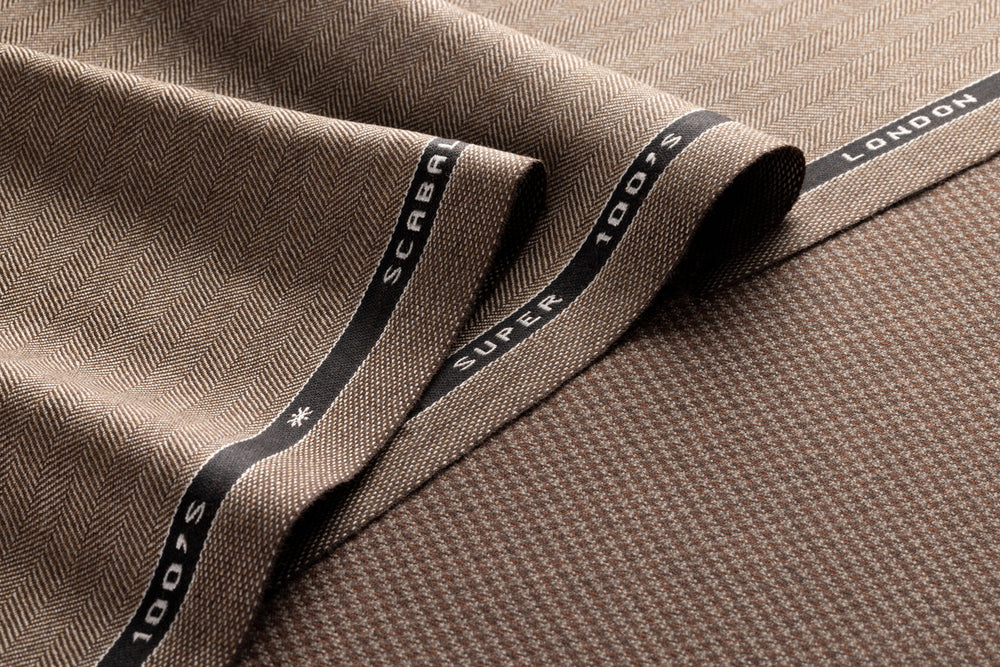
Herringbone — A V-shaped weave pattern resembling the skeleton of a herring. One of the most versatile suiting patterns, available in weights from light worsted to heavy tweed.
Hopsack — An open, basket-weave fabric with a rough texture. Breathable and casual in character. Often used for summer jackets and blazers.
Houndstooth — A broken check pattern with a distinctive pointed, irregular edge. Available in sizes from micro to large. A classic suiting pattern associated with country and sporting dress.
I–P
Linen — A natural fibre from the flax plant. Linen suiting is exceptionally breathable and ideal for hot climates. It wrinkles readily, which is considered part of its character. Pure linen suits are casual; linen-wool blends offer a compromise between breathability and structure.
Melton — A heavy, tightly woven fabric with a smooth, felted surface. Used primarily for overcoats. Melton is wind-resistant and very warm.
Mohair — Fibre from the Angora goat. Mohair adds lustre and resilience to suiting cloth. Mohair-wool blends are popular for formal and evening wear; the fabric has a distinctive sheen and holds a crease well.
Moquette — A cut-pile fabric used for upholstery and, occasionally, for very formal waistcoats.
Mouliné — A yarn made by twisting together two or more threads of different colours. Creates a subtle, heathered effect in the finished cloth.
Nailhead — A small, regular pattern of tiny squares or dots that resembles the head of a nail. A subtle business suiting pattern.
Pick-and-Pick (Sharkskin) — A fine, alternating weave of two colours, typically black and white or navy and grey, creating a subtle, shimmering effect. Associated with 1950s and 1960s suiting.
Pinstripe — A narrow stripe pattern, typically white on a dark ground, created by a single thread or a very narrow band of contrasting colour. A classic business suiting pattern. The width of the stripe and the spacing between stripes vary considerably.
Prince of Wales Check — A large, complex check pattern combining a glen plaid with a coloured overcheck. Named after the Prince of Wales (later Edward VIII). One of the most recognisable suiting patterns.
S–W: Super Numbers & Finishing Terms
Saxony — A fine, soft woollen fabric with a slight nap, originally from Saxony in Germany. Used for formal suiting and overcoats.
Serge — A twill-weave fabric with a diagonal rib on both sides. Traditionally used for naval and military uniforms; now a classic suiting fabric. Serge is hardwearing and holds a crease well.
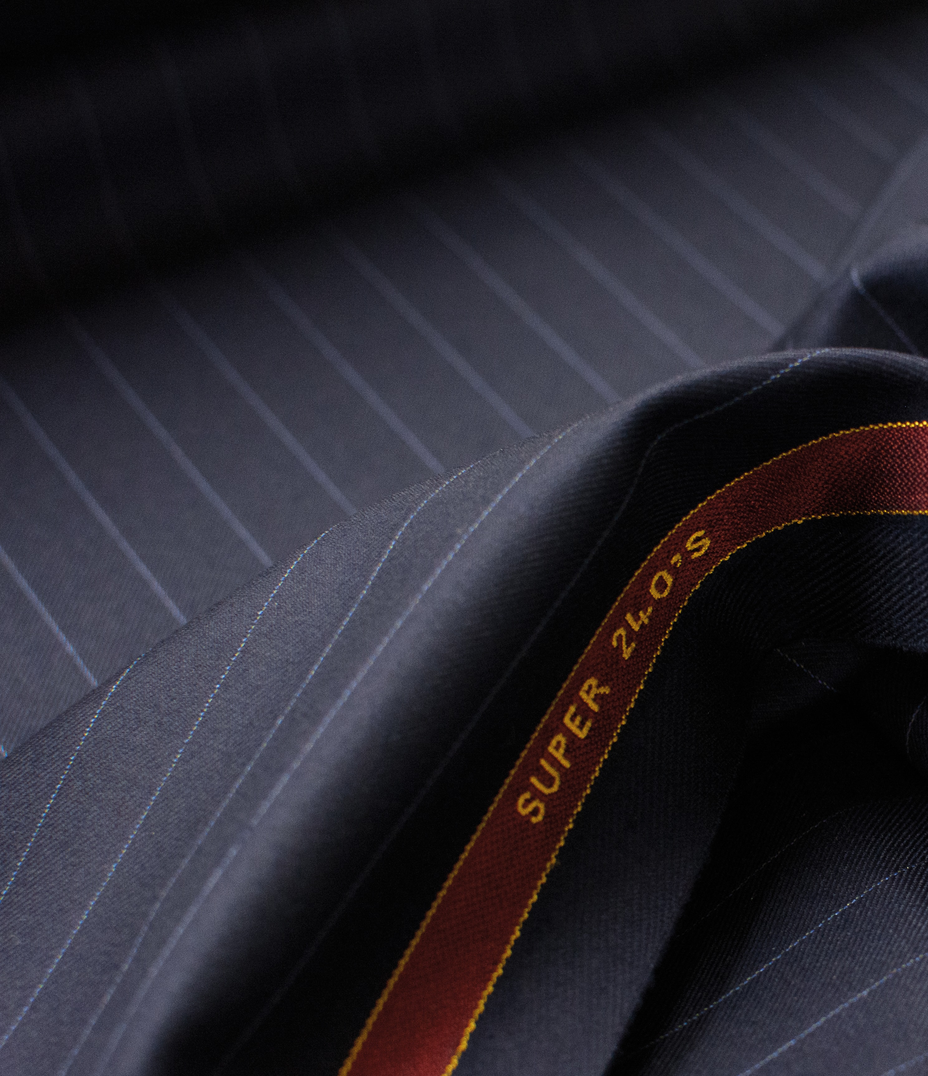
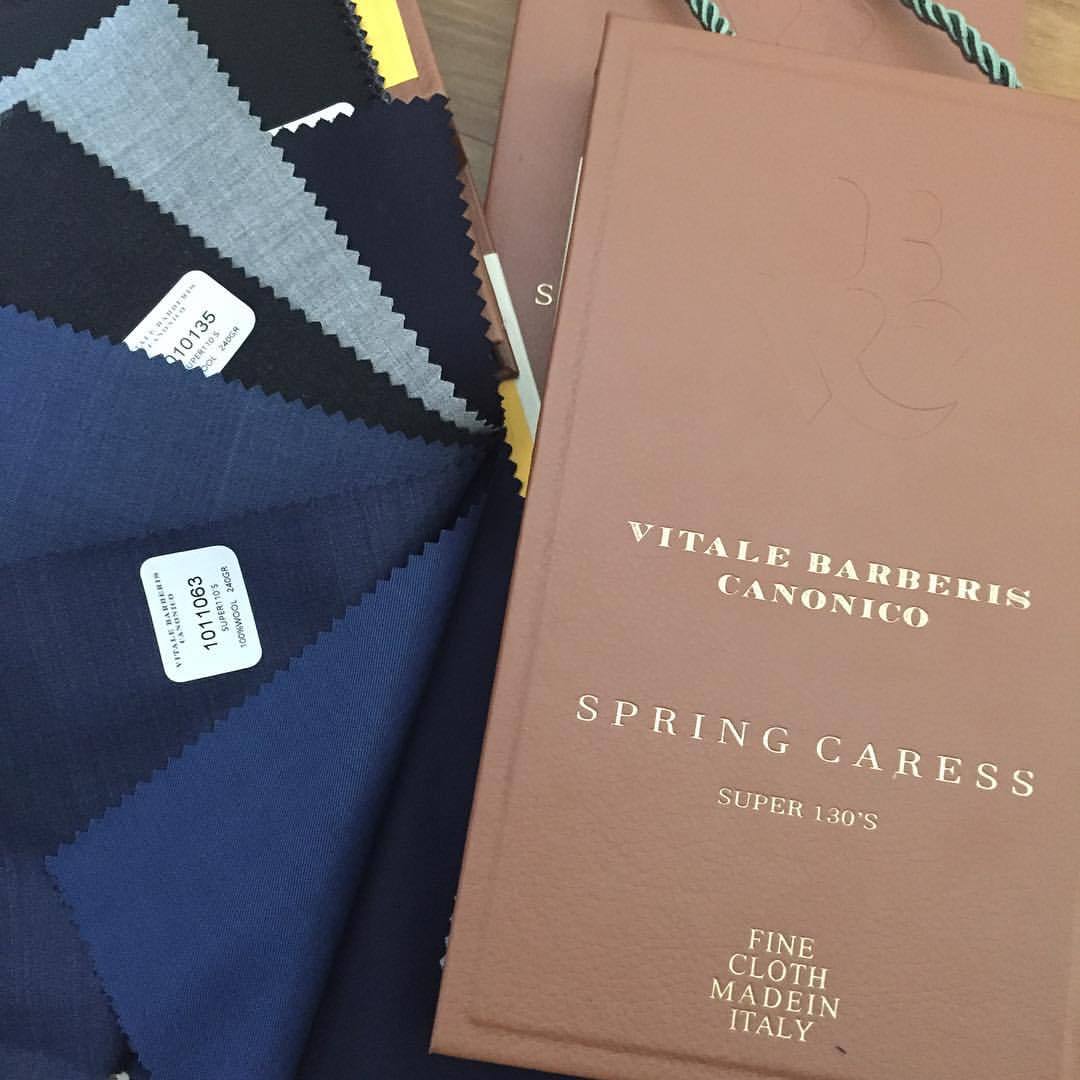
Super Numbers (Super 100s, 120s, 150s, 180s) — A grading system for worsted wool based on the fineness of the fibre, measured in microns. Super 100s uses fibres of approximately 18.5 microns; Super 150s uses fibres of approximately 15.5 microns; Super 180s uses fibres of approximately 14 microns. Finer fibres produce softer, more lustrous cloth but are also more fragile. For everyday suiting, Super 100s to 120s offers the best balance of softness and durability. Super 150s and above are best reserved for occasional wear.
Thornproof Tweed — A tightly woven tweed designed to resist thorns and brambles. Originally developed for country sports.
Tweed — A rough, open-weave woollen fabric, typically in earthy colours. Originally from the Scottish Borders. Tweed is casual, hardwearing, and characterful.
Twill — A weave structure in which the weft thread passes over one or more warp threads in a regular, diagonal pattern. Twill weaves are stronger than plain weaves and drape better.
Venetian — A smooth, lustrous fabric with a satin-like finish, woven in a twill structure. Used for formal suiting and dress uniforms.
Vicuña — The rarest and most expensive natural fibre in the world, from the vicuña, a South American camelid. Exceptionally soft and warm. A vicuña suit is a significant investment.
Worsted — Wool that has been combed to align the fibres before spinning, producing a smooth, strong yarn. Worsted suiting is the standard for business and formal wear. Contrasts with woollen cloth, in which the fibres are carded rather than combed, producing a softer, more textured fabric.
Ready to Commission
Begin Your Tailoring Journey
Consultations are complimentary and by appointment only.