Why Trouser Fit Is Underrated
Most men focus their tailoring attention on the jacket — the shoulders, the chest, the lapels. The trousers are treated as an afterthought. This is a mistake.
Poorly fitted trousers undermine even the finest jacket. Trousers that are too tight across the seat create horizontal creases that are visible from behind. Trousers that are too loose through the thigh look shapeless and sloppy.
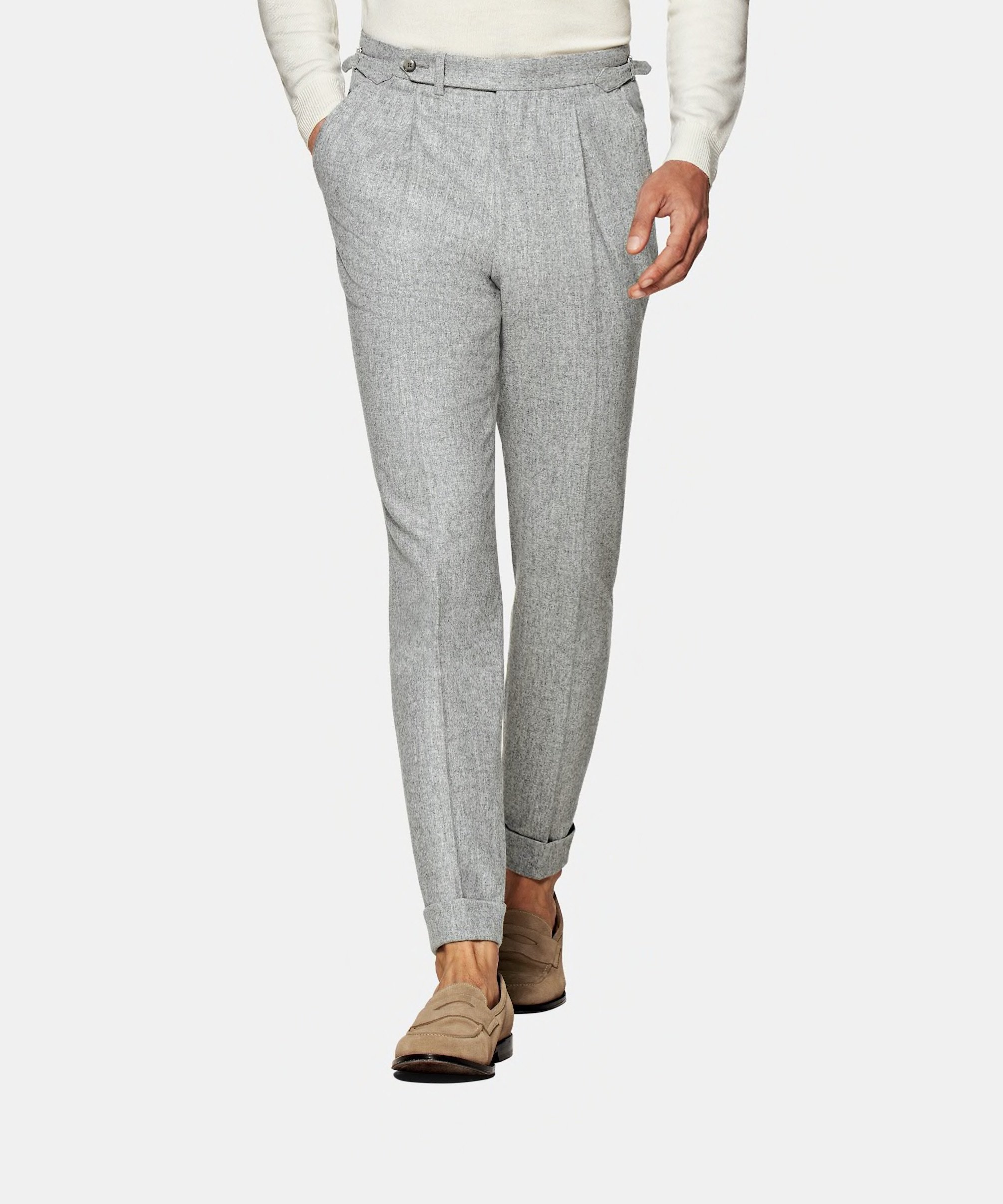
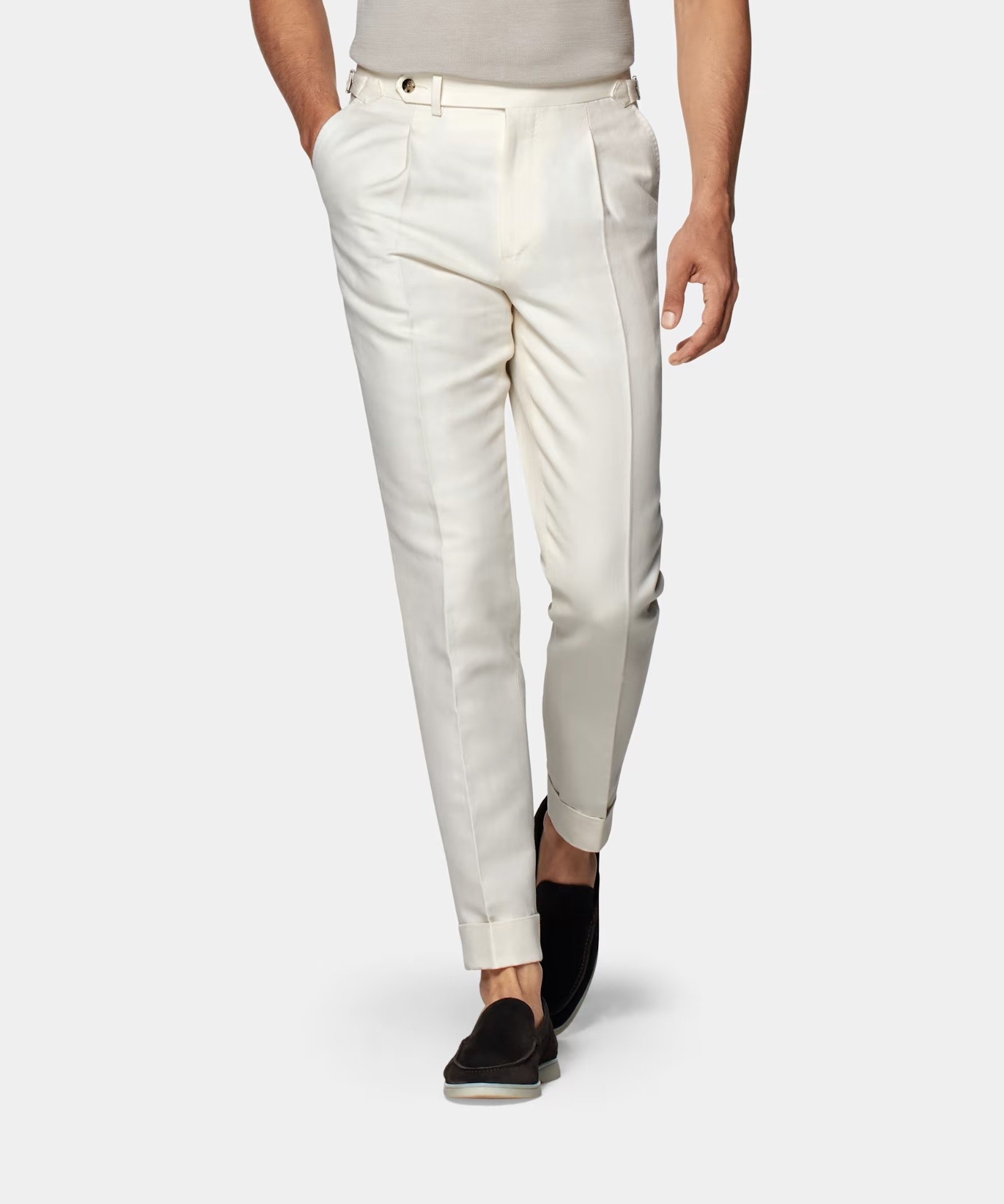
Conversely, well-fitted trousers — with a clean line from waist to hem, a proper break at the shoe, and a seat that fits without pulling — make the entire suit look better.
The Rise: Where Trousers Should Sit
The rise is the distance from the waistband to the crotch seam. It determines where the trousers sit on the body and has a significant effect on both comfort and appearance.
High-rise trousers (worn at the natural waist, typically 2–3cm above the navel) are the traditional and formal choice. They are more comfortable for most body types, they lengthen the appearance of the leg, and they are more flattering for men with a longer torso.
Low-rise trousers (worn at the hips) are more casual and contemporary. They work best on men with a shorter torso and longer legs.
The Seat and Thigh: The Comfort Zone
The seat and thigh measurements determine the comfort and appearance of the trouser through the most critical area. Too tight, and the trouser will pull and create horizontal creases; too loose, and it will look shapeless and add visual bulk.
The seat should fit smoothly without pulling. When standing, there should be no horizontal creases across the seat. When sitting, the trouser should accommodate the movement without the waistband pulling away from the body.
The thigh should have enough ease to allow comfortable movement — typically 3–5cm of ease for a fitted trouser, 6–8cm for a classic fit.
The Break: How Much Fabric at the Shoe
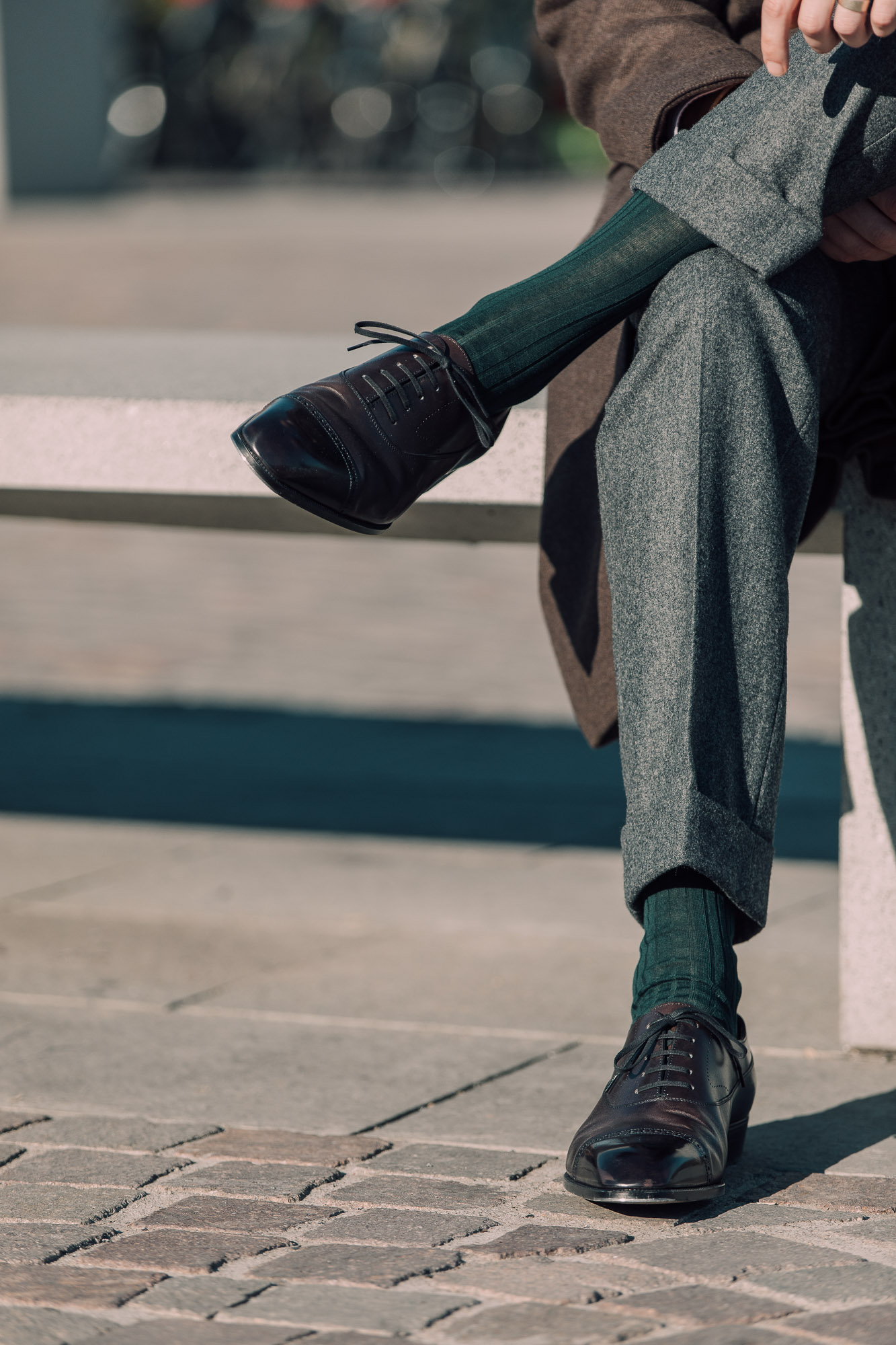
The break is the amount of fabric that rests on the shoe when the wearer is standing. It is largely a matter of personal preference and current fashion.
No break: the trouser hem just clears the top of the shoe. This is the most contemporary option. It works best with slim-cut trousers and shows off the shoe.
Half break: a slight fold of fabric rests on the shoe. This is the most versatile option — it works with most trouser widths and most occasions. It is the choice of most Savile Row tailors for standard business suits.
Full break: a substantial fold of fabric rests on the shoe. This is the most traditional option and is appropriate for very formal occasions.
Trouser Width: The Silhouette Decision
The width of the trouser leg — measured at the knee and the hem — determines the overall silhouette of the suit. This is a decision influenced by both personal preference and current fashion.
The trouser width should be proportional to the jacket. A slim jacket with wide trousers looks disproportionate; a fuller jacket with very slim trousers looks equally wrong.
For most business contexts, a trouser width of 18–20cm at the hem (for a standard-height man) is appropriate — slim enough to look contemporary, but not so slim as to restrict movement or look fashion-forward in conservative environments.
Ready to Commission
Begin Your Tailoring Journey
Consultations are complimentary and by appointment only.